03 Aug When Business Growth Outpaces Organizational Structure
Growth is positive, but it can expose weaknesses that were less visible when an organization was smaller.
As businesses expand, add new markets, or increase headcount, informal ways of working often become difficult to sustain. Decisions take longer, responsibilities overlap, reporting lines become unclear, and senior leaders spend increasing amounts of time resolving operational issues.
Common Warning Signs
An organization may have outgrown its current structure when:
- Important decisions depend on a small number of individuals.
- Teams are unclear about ownership and accountability.
- Similar work is being duplicated across departments.
- Processes vary significantly between business units.
- Management reporting no longer provides a reliable view of performance.
- Growth is increasing complexity without improving efficiency.
These issues are rarely caused by a lack of effort. More often, the organization’s structure and processes have not evolved at the same pace as the business.
Structure Should Support Strategy
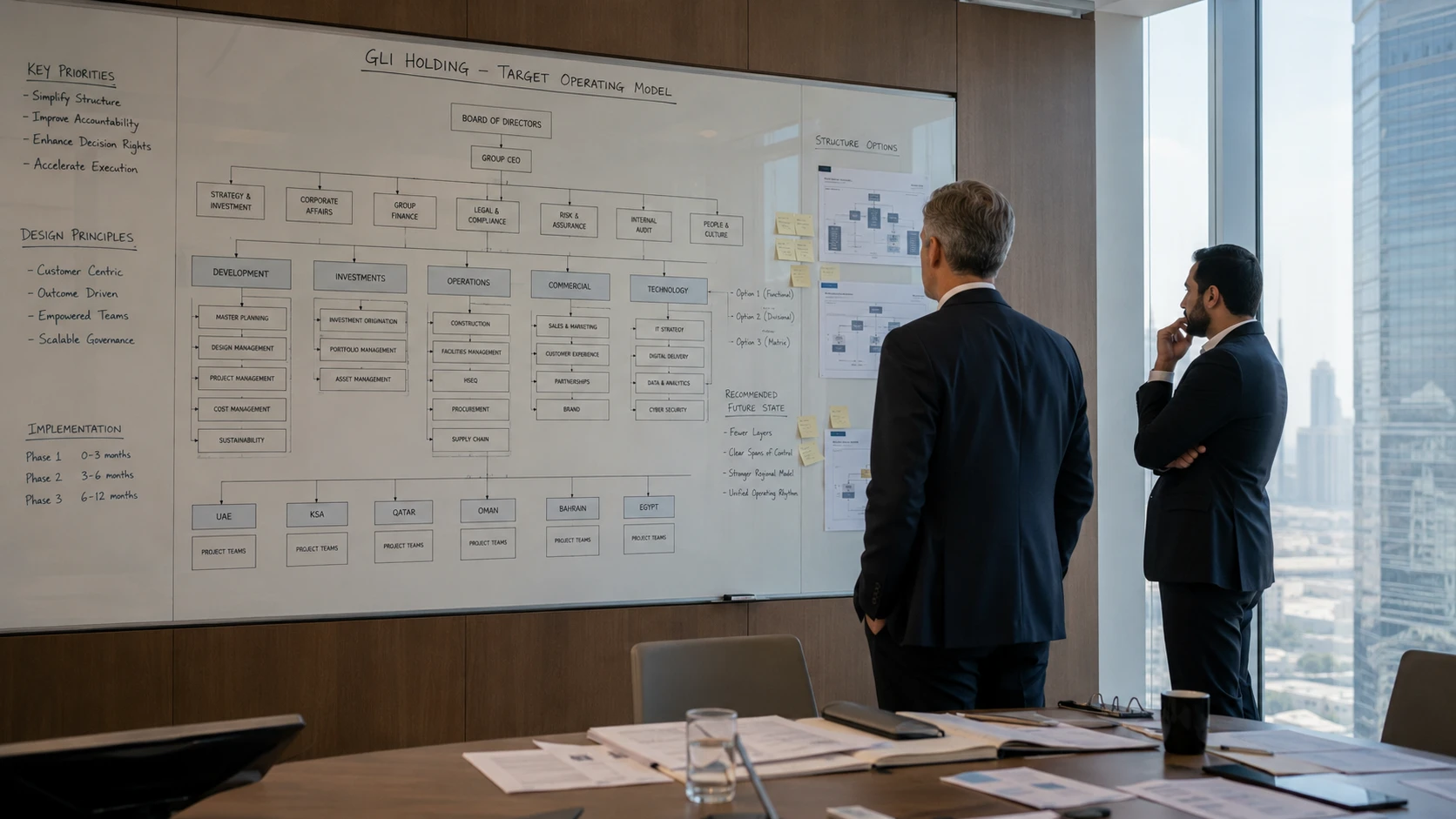
Organizational design is not simply about changing job titles or reporting lines. It should clarify how decisions are made, where responsibilities sit, and how information moves through the business.
A well-designed operating structure helps leadership teams:
- Assign accountability more clearly.
- Reduce unnecessary management layers.
- Improve coordination between functions.
- Strengthen performance measurement.
- Create a more scalable platform for future growth.
The objective is not to introduce complexity. It is to ensure that the organization can operate with greater discipline as its scale and ambitions increase.
From Diagnosis to Implementation
Before recommending change, it is important to understand how the organization currently functions in practice.
This includes examining formal structures, decision-making authority, management processes, operational dependencies, and the way teams interact across the business.
The result should be a practical implementation framework, not simply a new organizational chart. Leadership teams need clearly defined responsibilities, reporting mechanisms, transition priorities, and measurable outcomes.
Building for the Next Stage
Growth should not require an organization to accept permanent inefficiency.
When structure, processes, and accountability are aligned with strategy, businesses are better positioned to scale with control, respond to changing market conditions, and maintain consistent performance over time.